Symptoms vary depending on the stage of the disease. Learn if you are at high risk, what lung cancer warning signs are possible and when you should see your doctor.
Overview
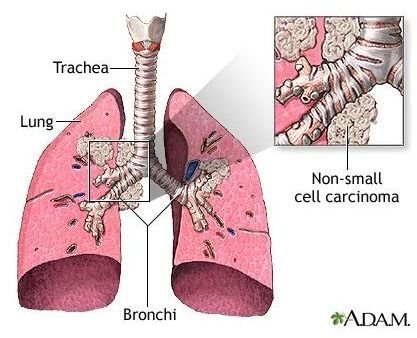
Lung cancer has become the leading cause of death in the United States and around the world, exceeding that of breast cancer in women. Cancer forms when normal cells experience a condition in which they grow uncontrollably. These abnormal cells start developing tumors that are harmful as they consume nutrients, oxygen and space from normal cells. Click on image to enlarge.
Lung cancer is able to metastasize or spread to other parts of the body if left untreated. Once it metastasizes, the tumor in the lung is known as the primary tumor, while the tumors arising in different parts of the body are known as metastatic tumors or secondary tumors.
The primary cause leading to this cancer is cigarette smoking. Cigarettes contain at least 4,000 chemicals which can slowly result in the presence of the cancer, especially in individuals who smoke more than one pack of cigarettes a day. If so, this person is more likely to have a risk of developing lung cancer up to 25 times than someone who never smokes.
Symptoms may vary from one person to another. Warning signs are not always present and they are not always easy to identify. The following are possible symptoms of lung cancer:
Without Symptoms
Often, the cancer is first discovered during a routine exam when a CT scan or chest X-ray is performed. Normally a small mass resembling a coin, called a coin lesion, is found. About one-fourth of all people who have this mass have no complaints when identified.
General Symptoms
Those suffering from lung cancer are likely to experience nonspecific symptoms, which may also be present in other cancers, such as extreme tiredness (fatigue), weakness, loss of appetite and weight loss. Mood changes and depression may also arise.
Indications Linked to the Cancer
As the cancer progresses, wheezing (a whistling sound when breathing), difficulty breathing, coughing up blood (hemoptysis) and chest pain can occur.
If the cancer invades the esophagus, the person may have difficulty swallowing (dysphagia). If a large airway is affected and becomes obstructed, a portion of the lung may collapse. This dangerous condition can eventually result in infections like pneumonia and abscesses in the blocked section.
The attack of nerves might lead to shoulder pain radiating toward the outside of the arm. This condition is called Pancoast’s syndrome. In addition, this interference in nerves can possibly bring about hoarseness because the vocal cords are paralyzed.
Indications Linked to Metastasis
If the cancer has metastasized to the brain, it can lead to several neurologic symptoms like headaches, blurred vision, weakness or loss of sensation in the parts of the body and seizures. If lung cancer spreads to the bones, agonizing pain can be felt in the areas involved.
When to Be Concerned
You need to see your health care provider if you experience warning signs such as:
- Chest pain
- Chronic cough
- Persistent bronchitis
- Bloody mucus
- Wheezing
- Loss of appetite and weight loss
References
eMedicineHealth.com: Lung Cancer Overview - https://www.emedicinehealth.com/lung _cancer/article_em.htm#Lung%20Cancer%20Overview
MedicineNet.com: Lung Cancer - https://www.medicinenet.com/lung _cancer/page4.htm
MedicineNet.com: How Common Is Lung Cancer? - https://www.medicinenet.com/lung _cancer/page2.htm
Photo Credit
Image courtesy of the National Library of Medicine.