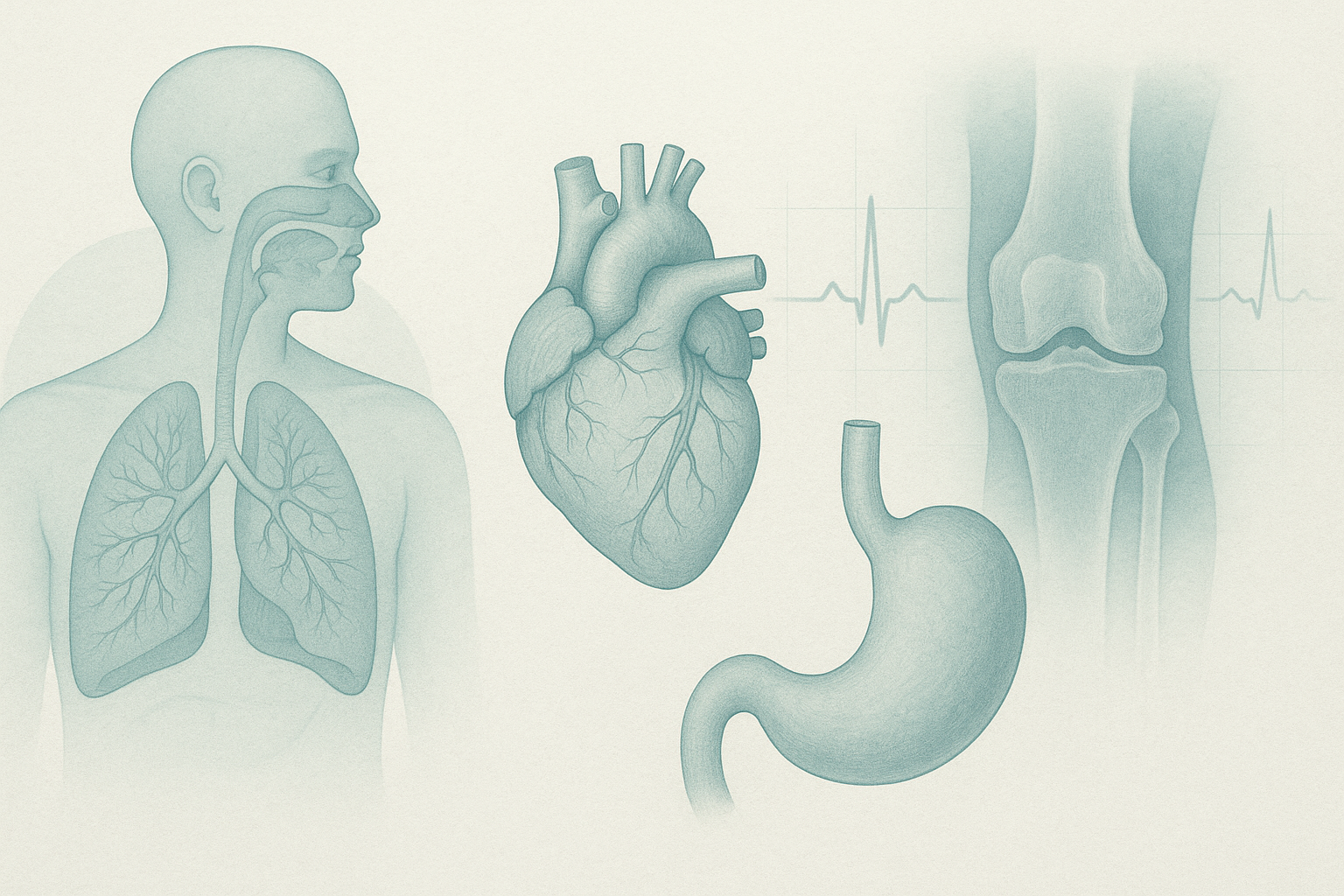
Learn about the signs of hyperthyroidism. Discover more information about the disease that causes the thyroid gland to become overactive and what symptoms it presents.
What Is Hyperthyroidism?
The thyroid gland is a mass of endocrine tissue located on each side of the trachea below the larynx in the throat. It secretes the thyroid hormones; the most active of these are the hormones thyroxine (T4) and triiodothyronine (T3). The thyroid hormones are responsible for regulating the metabolic processes within the body. Regulation occurs through negative-feedback loops involving the pituitary gland in the brain.
Several different diseases cause the abnormally high release of thyroid hormones (hyperthyroidism). The most common is Graves’ disease, which is an autoimmune disease in which autoantibodies bind to and activate cellular receptors in the thyroid gland for thyroid-stimulating hormone (TSH), causing the excessive production and secretion of thyroid hormones. Other causes include tumors of the thyroid tissue, toxic goiter and inflammation of the gland.
The thyroid hormones govern a wide array of metabolic functions within the body. They determine how fast the body should be using fats and carbohydrates for energy. The hormones play an important role in regulating normal body temperature. The rise and fall of thyroid hormone levels influence heart rate and function. The signs of hyperthyroidism, as expected, represent an increase in all of these functions; however, older patients may be asymptomatic or only show mild symptoms.
Cardiovascular Symptoms
The thyroid hormones cause the heart to beat faster as well as harder. Heart rate and contractility are measurably increased in patients displaying symptoms and signs of hyperthyroidism. Patients will regularly present with heart rates over 100 beats per minute (tachycardia). This can include abnormal heart rhythms (arrhythmia) or pounding feelings in the chest (palpitations).
Digestive Symptoms
Several symptoms indicative of hyperthyroidism take place along the digestive tract. Because of the increase in the metabolic processes, appetite and food intake may increase. Contrarily, even though appetite increases and a patient is eating more, he will suddenly and abnormally begin losing weight. Also, the patient’s bowel patterns may change; often, this includes more frequent bowel movements, but not necessarily the inclusion of diarrhea.
Mental State Symptoms
Thyroid hormones in excessive amounts can affect the nervous system and mentality of a patient in several ways. Often, patients will present with an increased sensitivity to heat. They may also show signs of nervousness or anxiety and be irritable. Interrupted sleeping patterns are common in hyperthyroidism patients. Difficulty in concentrating may also appear.
Other Symptoms
Other signs of hyperthyroidism can affect other parts of the body. These can include tremors, especially in the hands and fingers. Muscles may feel weak and fatigue easily. External symptoms can include hair loss, excessive sweating and clammy skin. In men, the development of breasts (gynaecomastia) can occur. In women, hyperthyroidism can disrupt the menstrual cycle.
Graves’-Specific Symptoms
All hyperthyroidism disorders share similar symptoms; however, an uncommon symptom of Graves’ disease is Graves’ ophthalmopathy resulting in protrusion of the eyeballs from their sockets. This occurs as a result of swelling in the tissues and muscles behind the eyes. The eyes may also appear red or swollen. Excessive tearing or discomfort may be present. The patient may also display light sensitivity, blurry vision or reduced eye movement.
References
Mayo Clinic: https://www.mayoclinic.com/health/hyperthyroidism/DS00344/DSECTION=symptoms
MedlinePlus Medical Encyclopedia: https://www.nlm.nih.gov/medlineplus/ency/article/000356.htm
University of California, San Francisco: https://www.ucsfhealth.org/conditions/hyperthyroidism/signs_and_symptoms.html
T. Colin Campbell Foundation: https://www.tcolincampbell.org/courses-resources/article/hyperthyroidism-symptoms-and-risk-factors/category/diabetes-and-thyroid-diseases/?tx_ttnews[backPid]=76&cHash=6c00c20388
American Thyroid Foundation: https://www.thyroid.org/patients/brochures/Hyper_brochure.pdf
University of Maryland Medical Center: https://www.umm.edu/altmed/articles/hyperthyroidism-000088.htm
Columbia University Medical Center, New York Thyroid Center: https://www.cumc.columbia.edu/dept/thyroid/hyperthyroidism.html
Colorado State University: https://www.vivo.colostate.edu/hbooks/pathphys/endocrine/thyroid/physio.html
Colorado State University: https://www.vivo.colostate.edu/hbooks/pathphys/endocrine/thyroid/chem.html
Colorado State University:https://www.vivo.colostate.edu/hbooks/pathphys/endocrine/thyroid/synthesis.html
